In real production, drying is not just about “heating parts.” It’s about controlled moisture removal without damaging the material. And that balance is where a well-designed drying oven makes all the difference.
Why Drying Ovens Matter in Manufacturing
In many industries, moisture or solvent removal is a critical step before moving to the next stage. I’ve seen situations where skipping proper drying led to entire batches getting rejected later during inspection.
What actually happens is simple. When moisture remains trapped inside or on the surface, it interferes with coatings, welding, bonding, or even electrical performance.
A drying oven creates a controlled environment where heat and airflow work together to remove that moisture in a predictable and repeatable way.
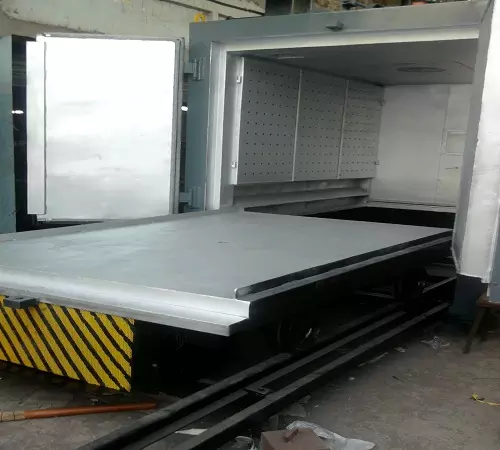
How Does a Drying Oven Work in Manufacturing Processes?
At its core, the working principle is straightforward. But in practice, getting it right requires attention to multiple factors like temperature, airflow, and exhaust.
The oven heats the air inside an insulated chamber. This heated air transfers energy to the product, raising its temperature. Once the material reaches a certain level, moisture starts to evaporate.
That’s only half the process.
One common issue I’ve seen is when moisture evaporates but doesn’t leave the chamber effectively. When that happens, humidity builds up inside, and drying slows down or becomes uneven.
This is where air circulation and exhaust systems come into play.
A fan continuously circulates hot air across the load. This ensures uniform heat distribution, so no area remains cooler than the rest. At the same time, the exhaust system removes moist air and replaces it with fresh, dry air.
So in real operation, drying happens because of three things working together: heat, airflow, and moisture removal.
The Role of Heating in Drying Ovens
Heating is the starting point of the process. Without proper heat input, moisture will not evaporate effectively.
In industrial drying ovens, heating can come from electric elements, gas burners, or sometimes steam systems. Each method has its own advantages depending on the application.
What actually matters more is temperature control. If the temperature fluctuates too much, drying becomes inconsistent.
I’ve seen cases where operators increase temperature to speed up drying, but this often causes surface drying while moisture remains inside. Later, that trapped moisture creates defects.
A good drying oven maintains stable and controlled temperatures throughout the cycle.
Why Air Circulation Is More Important Than You Think
Many people assume heating alone does the job. In reality, airflow plays an equally important role.
In real production, poor air circulation leads to uneven drying. Some parts dry faster, while others remain damp.
Forced convection solves this problem. Fans circulate hot air throughout the chamber, ensuring every part of the load receives consistent heat.
One practical observation I’ve seen is that even a well-designed oven can underperform if airflow paths get blocked due to improper loading.
So airflow design and loading practices go hand in hand.
Moisture Removal and Exhaust System
Drying doesn’t end with evaporation. The system must remove that moisture from the chamber.
If moist air stays inside, it slows down further evaporation. The process becomes inefficient.
That’s why drying ovens include controlled exhaust systems. These systems release humid air and allow fresh air to enter.
In some applications, operators try to reduce exhaust to save energy. But this often backfires. Reduced exhaust leads to higher humidity levels and longer drying cycles.
Maintaining the right balance between energy use and moisture removal is key.
Types of Drying Ovens Used in Manufacturing
In real manufacturing environments, different processes require different oven designs.
Batch ovens are common for small or varied production. Operators load parts, run the cycle, and unload them after drying.
Conveyor ovens handle continuous production. Parts move through the oven on a conveyor, making them ideal for high-volume operations.
Each type serves a specific purpose, and choosing the wrong one often creates more problems than expected.
Real Applications Across Industries
Drying ovens are used almost everywhere in manufacturing, but the purpose changes depending on the industry.
In electronics, drying removes moisture before assembly. Even a small amount of moisture can cause failure during operation.
In pharmaceuticals, drying ensures stability and shelf life. The process must remain highly controlled to maintain product quality.
In food processing, drying helps preserve products and reduce weight for storage and transport.
In coating applications, drying ovens cure paints and coatings. If drying is uneven, the finish quality drops significantly.
From what I’ve seen, the importance of drying becomes more visible when something goes wrong.
Common Problems and What Causes Them
In real production, drying issues don’t usually come from one big failure. They come from small, overlooked factors.
Uneven drying is one of the most common problems. This usually happens due to poor airflow or improper loading.
Overheating is another issue. Operators sometimes increase temperature to save time, but this damages sensitive materials.
Incomplete drying happens when moisture does not fully escape. This often traces back to insufficient exhaust or short cycle times.
Understanding how a drying oven works in manufacturing processes helps identify and fix these issues quickly.
What to Look for in an Industrial Drying Oven
From an engineering perspective, performance matters more than just specifications.
Temperature uniformity is critical. The oven should maintain consistent heat across the entire chamber.
Airflow design should ensure even distribution. Dead zones inside the chamber lead to uneven results.
Control systems should be simple and reliable. Overly complex systems often create operational confusion.
This is where experience in design makes a difference. JR Furnace focuses on practical performance, ensuring the oven works reliably under actual production conditions.
Practical Tips from Shop Floor Experience
In real production, small adjustments often improve drying efficiency more than major changes.
Proper loading plays a big role. Parts should allow airflow around them instead of blocking circulation.
Regular maintenance keeps fans, heaters, and exhaust systems working properly. I’ve seen performance improve just by cleaning airflow paths.
Monitoring temperature and cycle time helps maintain consistency. Operators who pay attention to these details usually face fewer issues.
How Drying Ovens Support Overall Manufacturing Efficiency
A drying oven may look like a simple piece of equipment, but its impact goes far beyond moisture removal.
It affects product quality, production speed, and even downstream processes.
When drying works properly, everything else runs smoother. When it doesn’t, problems start appearing across the entire production line.
Understanding how a drying oven works in manufacturing processes helps manufacturers make better decisions, avoid common mistakes, and maintain consistent output.